
2011年3月15日星期二
Sony Ericsson's Xperia Play advertise: gross human thumbs stitched onto robots, drugged clubgoers, not much more we can say

2011年3月6日星期日
Sony Ericsson & Windows Phone 7 prototype caught in the wild?

2011年3月2日星期三
Sony Ericsson wooing developers ahead of Xperia Play launch
Sony Ericsson is doing its best to attract developers who can create games tailor-made for its upcoming Xperia Play smartphone, working with third-party tool makers to simplify the development process.
The Android 2.3-based Xperia Play comes with a 4-inch touchscreen and slide-out PlayStation controls, including four navigation buttons to the left and “X,” square, circle and triangle buttons to the right. In the middle, the smartphone has a touch pad.
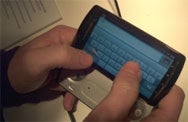 “It is probably the best gaming phone available on the market … but the content will be key, as with any other smartphone, and in this case content is the games,” said Francisco Jeronimo, research manager for European Mobile Devices at IDC.
To get games, Sony Ericsson will have to attract game developers, large and small. This week, the company is attending the Game Developers Conference in San Francisco to show off the Xperia Play.
To make life easier for developers, Sony Ericsson is working with third-party tool developers. On Tuesday, Havoc announced that the company has optimized its developer tools for the smartphone. Also on Tuesday, Unity announced it has started shipping an Android version of its developer tool, which comes with integrated support for the Xperia Play.
Bogdan Iliesiu from Angry Mob Games detailed the work that went into optimizing its Guerilla Bob game for the Xperia Play, in a post on Sony Ericsson’s developer blog on Monday. The work included adding support for its physical buttons and touch pad, navigation for the game menus, on-screen control tutorials and optimizing the graphics.
The porting was done using Unity, and took about one week, Iliesiu said via e-mail.
From a developer point of view, Sony Ericsson is doing a great job on the Xperia Play so far, according to Iliesiu. The hard part will be to educate users, so they don’t expect all the premium games will be free or cost around 99 cents, he said.
To help secure tailored games for the Xperia Play, Sony Ericsson has also partnered with a number of larger gaming studios. Electronic Arts is developing The Sims 3 and FIFA 10 for the smartphone. GLU Mobile and Activision are adding Guitar Hero, while titles from Gameloft will include Assassin’s Creed and Splinter Cell.
Also, the Xperia Play is the first PlayStation Certified phone, which means users will be able to play some games from the first PlayStation.
More than 50 gaming titles will be available when the Xperia Play launches. The phone will start shipping in March, according to Sony Ericsson.
The Lowdown Of Mobile: Apple iPad, GetJar, IAB/MMA, Sony Ericsson
Our list of mobile news to start your day. Today’s topics: Apple (NSDQ: AAPL) iPad 2; new mobile ad standards from the IAB and the MMA; GetJar makes the case for taking less of a cut compared to Google (NSDQ: GOOG) and Apple; and Sony (NYSE: SNE) Ericsson’s U.S. fightback—or should we say “Play"back?
—iPad launch: In the countdown to Apple’s simultaneous events today in Cupertino and London to launch the new iPad, there’s lots of chatter flying around about what else might be on the cards:
 One Apple staffer, speaking anonymously, has said that today’s launch, product-wise, will not be all that significant—faster, thinner, better sound and more cameras are the main takeaways. More important will be the launch of the iPad 3 slated for this autumn, in time for holiday shopping and as a followup to all the other new tablets (all the Honeycomb devices, plus RIM’s PlayBook and HP’s TouchPad) that will be launching between now and then.
A possible re-launch of MobileMe, to include cloud-based storage and streaming of music and other media, could be a bigger deal. The question is whether Apple will tie that media storage to content purchased via iTunes, or whether it will include content purchased elsewhere too—LaLa, the cloud-based music company that Apple bought last year, allowed for items purchased from multiple places. Such a cloud service will be a big development for Apple, as a new kind of business line, and will give cloud-based, digital lockers a profile they have yet to achieve, despite launches from big names like Sony and an enormous amount of cloud-based media companies on the market already (think Thumbplay, MOG, Spotify, etc.).
The source did not mention iOS 5, although the latest version is “almost guaranteed” to make an appearance today.
Some are speculating that today Apple will also unveil a new partnership with its Geniuses, reportedly to be called “Joint Venture.” This is part of Apple’s ongoing strategy to build up its small business user base—a lucrative area that has been dominated by Microsoft-based resellers for years now. Under the new plan, a $500 annual fee will get you services like training sessions, data transfer assistance, and replacement machines for when your devices to pack up and need repair. The plan is sold when users buy Macs but if it gets unveiled today, it may also be applicable to iPhones and iPads, too.
—With all the Apple-talk, it’s easy to overlook other significant news. Included in this, the Internet Advertising Bureau and the Mobile Marketing Association have released a “standard methodology” for how to measure the effectiveness of mobile advertising and marketing campaigns. Such standards have been a long time in the planning, and while a number of third parties (and mobile operators) already provide tools to measure certain metrics like click-through rates, having a comprehensive policy should encourage more ad spend from brands overall.
—GetJar’s in-app USP: GetJar, currently largest non-native app store, has waded into the in-app purchasing debate. It says it gives the best deal of all to developers because it doesn’t take any cut at all when a publisher incorporates purchasing into its apps. On top of that, a publisher can choose whatever billing platform he wants for its app. One billing provider, Billing Revolution, takes only $0.15 per transaction, no matter the value.
—Sony Ericsson: The company’s much-anticipated “PlayStation” phone, the Xperia Play, will be launching with Verizon later this year and in Europe at the end of this month. The Verizon device will, of course, be a CDMA handset; but in the meantime, the company has had the European UMTS version of the device approved by the FCC. The supplementary documents include what appears to be a full user manual.
2011年3月1日星期二
Xperia Play going back to the FCC, this time with GSM
 We're all familiar with this handset by now, but what we weren't suspecting (although we have yet to finish our first cup of coffee) to see a GSM version of the Xperia Play come through the FCC this sunny Tuesday morning. While we know that Verizon won't be the sole carrier of the phone in the states (we heard that from Sony Ericsson CTO Jan Uddenfeldt himself), there is yet to be another carrier confirmed. So maybe this is an indication of another possible future? Or, most likely, this is just one of those "north of the border" jobs -- as you know, the FCC gets its look at all Canada-bound phones, and this particular phone is exclusive to Rogers. Get a closer look after the break.
Update: Further examination of the docs reveal that this bad boy has global GSM bands and 900 / 2100MHz 3G, which is primarily used in Europe and Asia.

Update: Further examination of the docs reveal that this bad boy has global GSM bands and 900 / 2100MHz 3G, which is primarily used in Europe and Asia.
2011年2月28日星期一
Motorola subsidiary 3LM to offer enterprise-class device management for Android; HTC, Sony Ericsson, and others on board
 Apple's been working hard to chip away at RIM's lead in the enterprise over the last couple years by beefing up iOS' IT policy management chops in ways that traditionally only BlackBerry (and thenow-marginalized Windows Phone 6.5 / Windows Embedded Handheld platform) have excelled at, but Motorola -- a company that's got virtually 100 percent of its skin in the Android game -- would obviously like to see that change. To that end, it acquired a little company called 3LM (that's "Three Laws of Mobility") last year that's been working on an enterprise management platform for Android, and it appears they've pulled off a bit of a coup -- not only will its parent company be supporting it on devices starting in the second quarter of the year, but devices from competitors like HTC, Sharp, Sony Ericsson, and Pantech are on board, too. A standard software package for this sort of thing is just what IT bosses like to see -- and it could be Android's most dangerous strike yet on the enterprise side of the market. Follow the break for Moto's press release.
Sony Ericsson detailing Xperia Play development: buttons easy, touchpad just a little trickier

Opinion Of Sony Ericsson developer boss: 'in favor' of rooting option if done right

2011年2月27日星期日
Sony Ericsson Xperia Arc turning pink in Japan for March 24th launch

2011年2月22日星期二
Industry Moving: Google Mobile; Sony Ericsson; MEF
—Google (NSDQ: GOOG) Mobile: Russell Buckley (pictured) is leaving Google’s mobile advertising unit AdMob, about a year after the company was bought by Google for $750 million, four months after CEO Omar Hamoui resigned, and two weeks after head of engineering Kevin Scott left to join LinkedIn as VP of engineering. Buckley was AdMob’s first employee and eventually became the company’s MD for Europe and head of global alliances. He will concentrate on angel investing for the moment. (via GoMo News)

—Sony (NYSE: SNE) Ericsson: James V. Mahon, the handset maker’s former deputy general counsel, has now joined Andrews Kurth as Partner in the intellectual property group. Among Mahon’s responsibilities at Sony Ericsson (NSDQ: ERIC) was head of global litigation, overseeing areas such as patents and trademarks. Sony Ericsson is currently suing Clearwire (NSDQ: CLWR) for having a too-similar green logo, although the other week a judge denied Sony Ericsson’s request for an injunction. (via email, PhoneNews)
—Mobile Entertainment Forum: The MEF has announced new board members for the EMEA region. Lee Epting, Vodafone Group (NYSE: VOD) content services director, is now the MEF EMEA chair and MEF global board director; Jonathan Jowitt, Dolby’s Head of Mobile Content Solutions, and Colin Yeh, Qtel’s Director Group Innovations, have been elected as MEF EMEA Co-Vice Chairs. Other new board members include executives from MTN, Buongiorno (BIT: BNG) and InMobi.
HOT ! Mobile World Congress Was Dominated by Google's Android OS
The biggest European mobile technology show of the year has now closed down in Barcelona, leaving a record number of global smartphone premieres behind (as well as a few tablets). What all of these devices have in common is their operating system: the Android OS.
Even though Nokia and Microsoft started the hottest topic of the show three days before the Mobile World Congress even began by announcing their strategic collaboration, as this tradeshow ended it was clear that the biggest star and winner was actually Google. This was the first time in MWC history that there was no premiere of a device with Symbian OS, Windows Phone, BlackBerry OS or any other platform that is not Android.
 The story that Nokia would be using the Windows Phone 7 as its main platform for all future smartphones got watered down by the end of the tradeshow, largely because of big spectacles made at the start of the show by Samsung and Sony Ericsson to announce their new Android OS models.
Samsung
First, Samsung presented its Galaxy S II as the successor of a smartphone which has sold over 10 million units all over the world. The Galaxy S II will have a bigger screen, even though it is going to be slimmer and lighter than its predecessor -- it might even be the world's thinnest smartphone as well, but that is still in question. It will also have a dual core processor, a Super AMOLED Plus display and TouchWiz 4.0 user interface.
First, Samsung presented its Galaxy S II as the successor of a smartphone which has sold over 10 million units all over the world. The Galaxy S II will have a bigger screen, even though it is going to be slimmer and lighter than its predecessor -- it might even be the world's thinnest smartphone as well, but that is still in question. It will also have a dual core processor, a Super AMOLED Plus display and TouchWiz 4.0 user interface.
More information on this model is available in this preliminary review:
- Samsung Galaxy S II Hands-On Preview
 Sony EricssonStraight after this, Sony Ericsson revealed three cell phones with Google's operating system: the XPERIA Play, XPERIA neo and XPERIA pro.
By far, the one that garnered the most attention was the "PlayStation Phone", XPERIA Play, which represents the first actual gaming console and cell phone hybrid with its 4-inch 480 by 854-pixel screen, 1GHz processor and Adreno 205 GPU. XPERIA Play will be released by Verizon this spring, and about 50 games will be available for it at launch.
A first-look review of this smartphone can be found here:
- Sony Ericsson XPERIA Play Hands-On Preview
The remaining two models from Sony Ericsson, the XPERIA neo and XPERIA pro will use Android OS 2.3 (Gingerbread) as their platform with the Timescape/Mediascape user interface, as used by previous Sony Ericsson phones supporting Android. Both will have 3.7-inch capacitive screens, 8-megapixel back-facing cameras, and Qualcomm 1GHz Snapdragon processors. The difference between these two devices will be that the XPERIA pro is a slider with a QWERTY keyboard.
LG
 All of these announcements came before the Mobile World Congress had even officially started. On the first "real" day of the tradeshow, LG unveiled the Optimus 3D, which lives up to its name with a 4.3-inch 3D display, for which special glasses are not necessary. A 3D camera is also going to be included.
All of these announcements came before the Mobile World Congress had even officially started. On the first "real" day of the tradeshow, LG unveiled the Optimus 3D, which lives up to its name with a 4.3-inch 3D display, for which special glasses are not necessary. A 3D camera is also going to be included. For a more in-depth look at this Android-based smartphone, read this first-impressions review:
- LG Optimus 3D Hands-On Preview
HTC
Not to be outdone, HTC announced five smartphones -- all running the Android OS.
Not to be outdone, HTC announced five smartphones -- all running the Android OS.
The Desire S, Incredible S and Wildfire S will only receive minor upgrades hardware-wise compared to their currently-available predecessors which do not have the "S" in their name. This left MWC attendees more interested in guessing why the Taiwanese manufacturer chose to add this letter to their names than in the actual devices themselves.
The HTC ChaCha and Salsa show a bit more innovation -- the two HTC "Facebook Phones" will include Gingerbread and a special key with the Facebook logo. When it is pressed, the phones are going to automatically bring up Facebook to the very segment of this social network that is associated to what the user is doing. For instance, if they were taking a photograph, a punch of this key would automatically upload the image to their Facebook profile.
The ChaCha will have a 2.6-inch screen, a 600 MHz processor and a QWERTY keypad, while Salsa will not have a physical keyboard, but it is going to include a 3.4-inch display. Both of these models are headed for AT&T.
Tablets, TooMobile World Congress 2011 was about more than smartphones, as this has become a venue for tablets, too.
Samsung presented its Galaxy Tab 10.1, its first Android OS 3.0 (Honeycomb) tablet. It comes with a touchscreen measuring 10.1 inches and weighs in at just 1.23 pounds, making it noticeably lighter than the iPad and Motorola XOOM. The secret behind it all is that it is entirely crafted out of solid plastic.
A preliminary review can be found on Brighthand's sister site,TabletPCReview.com:
- Samsung Galaxy Tab 10.1 Hands-On Preview
In addition to its 3D smartphone, LG also presented a tablet which has 3D features -- the Optimus Pad, also known as the G-Slate. This is going to be an 8.9-inch tablet with Android OS 2.3 (Honeycomb), a stereoscopic back-facing camera for recording 3D video which can be watched on its screen with 3D glasses.
A first impressions review is on TabletPCReview.com:
- LG G-Slate/Optimus Pad Hands-On Preview
 The tablet which got the most exposure in Barcelona was presented during the second half of the show, the HTC Flyer. It will come with a 7-inch display and Android OS 2.3 (Gingerbread) and HTC's Sense UI, adjusted for tablets. The Flyer will have an additional level of functionality due to the N-trig pen and HTC`s Scribe technology.
- HTC Flyer Hands-On Preview
LTE Was MIA
Apart from Google's Android OS, all of the devices presented in Barcelona have one more thing in common: they do not support LTE. Given that several smartphones and tablets that will use this up-to-date 4G technology were presented at CES in Las Vegas last month, Europe continues to lag behind the United States when it comes to LTE expansion.
Apart from Google's Android OS, all of the devices presented in Barcelona have one more thing in common: they do not support LTE. Given that several smartphones and tablets that will use this up-to-date 4G technology were presented at CES in Las Vegas last month, Europe continues to lag behind the United States when it comes to LTE expansion.
Two of the biggest hits of the show were the Samsung Galaxy S II and the HTC Flyer support HSPA+ technology, but, it is clear that Europe will have to wait a while for new devices that support LTE.
2011年2月20日星期日
My So-Called Cellphone Show

Tim Stevens: Motorola MicroTAC DPC-550, Cellular One
 Bought in 1995 for some amount of money at Cellular One. Specs included a retractable antenna, seven-character LED display, buttons that glow and beep when you push them.
This one goes back a ways, to a time when I was still in high school and my mother was a customer service rep for Cellular One. As such she got access to some hot (at the time) cellular technology and was kind enough to let her fledgling geek of a son use it and, gasp, even bring it to school. Despite being in a class of about 400 kids I was the only student with a phone. In fact, none of the faculty even owned them at that point. These days teachers ban kids from taking phones into classrooms, but back then my classmates passed it around the room because it was such a novelty. One girl tried dialing Jenny at 867-5309 in the middle of physics class. No answer.
Enough of reliving former glory, on to the device itself. Really all that you need to know about the 550 is that it was a phone. Just a phone. Games? E-mail? Texting? Address book? Get outta here. With a seven-character LED display you couldn't even call long-distance without the area code getting bumped off to the left. People complain today about the iPhone 4 signal bars dropping. This thing didn't even have signal bars, just a little red "NoSvc" light that popped on should you happen to stumble out of a metropolitan area -- or forget to raise that antenna.
As just a phone it worked well enough. I still remember the squishy, glowing keypad and the unfortunately small red send button in the lower-right, so tiny Motorola couldn't afford a vowel. Thus it was the SND button, kitty-corner from the PWR button. This was the phone that got me through high school -- at least I think it was. My memory isn't quite what it used to be. For college I was given a Sanyo SCP-4000, a model light-years beyond the Moto. It had a D-pad, an LCD screen, and not a even hint of coverage anywhere on campus. Those were the days.
Joshua Topolsky: Nokia 21X0, Sprint PCS (or AT&T)
Purchased sometime in 1995. Specs included a grayscale screen, protruding antenna, and possibly Snake.
 The year was 1995. I had just gotten my driver's license -- late to the game at the age of 18 -- and the roughest looking Volkswagen that $1000 could buy (a navy blue, 1985 Golf for those playing along at home). I'd also just discovered techno music, raves, moved out of my parent's house, and the VW was prone to breakdowns. Naturally my already-nervous mother and father feared the worst. I had a pager (as was the rage back in the heady, embarrassing days of the 90's), but that didn't seem to sufficiently allay my folks' fears.
 The solution? Force me to get to the nearest big box retailer and sign up for a cellphone contract, lest I be stranded on a desolate highway while traveling to or from an illegal warehouse party. In Pittsburgh -- my hometown -- there were really only two options for electronics (outside of the smaller mom and pop shops): Sun or Silo. This was well before the dawn of Circuit City and Best Buy, and abstract concepts like choosing a carrier (or even knowing what a carrier was) were not in play. Silo was a little more high-falutin' than Sun which meant the choice was simple.
So, off I went to pick out the finest cellular communications device money could buy. Actually, what did I know? Nothing really -- I was amazed that I would own a phone that you could use outside of your house. Today, I can't remember a lot of the details, but I'm nearly certain I walked out of the store with a Nokia 2120 (or at least some version of the 21X0 -- the company made duplicates on all kinds of carriers for years), with a calling plan of something ludicrous like 50 minutes a month.
The idea was that it would only be for emergencies -- and if the emergency was calling my friends to see if they wanted to have lunch and hit a record store, I had a lot of emergencies. The truth is, I was already addicted to constant connectivity and owning a phone I could use nearly anywhere just fed my growing problem. Without that phone, my early rave years would have never been the same, and who knows... I might never have found Engadget either.
Chris Ziegler: Motorola Lifestyle, Ameritech
 Bought somewhere around 1996 from a Circuit City Express (yes, Express) in suburban Detroit, Michigan. AMPS radio, 8-character LED display, classic and perfectly tasteful forest green shell.
Just check out the gallery below -- look at all those fun-lovingSaved By The Bell-generation young people enjoying life! Of course, what those wholesome teens and twentysomethingsaren't telling you is that they can't afford the service on their brightly-colored Motorola Lifestyles without significant underwriting from their parental units.
I'll be honest, I can't remember what the terms of my Lifestyle's service plan were, but I very specifically recall being warned not to use it unless I was being chased by the Russian mafia, lost in a war zone, or caught up in some other dire circumstance that would inevitably lead to my untimely death if I didn't send out a distress signal. If memory serves me correctly, my parents were reluctant to let me have it from the get-go, and consented only with the understanding that I'd have no monthly minute allowance and would pay some per-minute rate tantamount to extortion for the privilege of bombarding my skull with some hilariously high level of radiation that would undoubtedly be banned by modern standards.
Of course, considering the Lifestyle's meager feature set, I wasn't missing much. The handset had a one-line dot matrix LED display; I remember that many competing phones from other manufacturers at the time had really cheap-looking backlit monochrome segmented LCDs, so I really thought I was the big man on campus. After all, my phone (which, again, I wasn't allowed to use) could show numbers andletters! It also had a 99-number contact directory, which was great for storing the names of all my friends that I didn't have the money to call.
What made the Lifestyle interesting was that it was among the first phones -- in fact, the first that I can think of -- that put any serious effort into making a cellphone a lifestyle accessory (hence the name, I suppose) by offering it in a variety of bright colors and patterns. Nokia would go on to really popularize the concept with the Xpress-on series of devices and exchangeable faceplates, but it was the little ol' Lifestyle that introduced it to me at a time when the pure-business MicroTAC series was considered the gold standard in cellphone design. I opted for a lovely shade of forest green, which frankly may have been the only one that Circuit City had for sale at the time.
Though I frequently powered it on to enjoy the techno glow of its LEDs, I think I maybe ended up using the Lifestyle once or twice in the entire time I had it -- always for a call to my parents, of course. I ended up moving on to a Sony Zuma Z100 with Sprint PCS around the time I went off to college, an awesome phone whose oddball form factor has yet to be duplicated to this day. Shame, really.
Thanks to Motorola for digging the Lifestyle brochure out of its archives!


Thomas Ricker: Nokia 6110, Vodafone UK
Given to me by my employer in mid 1997 under a corporate account. It featured an Infra-red port and was the first Nokia phone to ship with Snake.
As cellphones were becoming popular in the US in the late 90s, I was living in the Haight Ashbury neighborhood of San
 Francisco -- an oddball mix of homeless hipsters holding ironic signs of homage to the poor-is-cool notion, aging hippies unable to move on, and art-school brat-pack wannabes more concerned with mixology than gadgets. For all their eccentricities, each of these groups had one thing in common: technology was the enemy, a weapon to be wielded by Ayn Rand herself at the end of days. As such, the only people who had cellphones were rich trust funders who could afford one for personal use, or corporate suits who begged their management for this ultimate symbol of upward mobility. I was neither.
That changed when I left the US for London (and a more mature perspective) back in 1997. As a new hire of a young startup, the first device given to me wasn't a laptop, but a cellphone. A Nokia 6110. A phone based on the consumer-oriented 5110 but with a more advanced user interface. A device that made US cellphones appear clumsy and brickish by comparison with its beautiful iridescent finish and icon-based UI that was intuitive even for a first time mobile (pronounced mo-Biyl) phone owner. Oh, and it had an infra-red port and Snake. It was glorious, I had arrived.
I was fired 3 months later when our startup was purchased by a larger competitor. I kept the 6110, later replacing it with the Ericsson T28s and the world's first Bluetooth headset, the £199.99 Ericsson HBH-10.
Laura June - Nokia 6110 - VoiceStream Wireless
Bought somewhere in the space between 1997 and 1998, for who knows how much money, the Nokia 6110 had a max contact count of 50, and no camera, but it had Snake and made calls, and really, nothing else mattered.
 In late 1997 or early 1998, despite the fact that almost no one I knew had a cellphone, I decided to buy one, simply for the fact that, having bought my first car, I was afraid of being stranded somewhere alone on the side of the road. The only people I knew that had cellphones at the time were my younger brother (who also had an intense series of pagers), and my cousin, who also went to college with me, so she, I thought, could serve as my guide into this mysteriously uncool territory I was wandering into.
My first cellphone began my long love affair with Nokias, and though I was at pains to determine which model was actually the first one I had, I've nailed it down to the Nokia 6110, on VoiceStream Wireless. I have to admit, it was the commercials featuring Jamie Lee Curtis that ultimately decided what carrier I would go with. I went to a mall kiosk, set myself up with my new phone, and headed home. It wasn't snowing, but it was freezing cold and there was plenty of snow on the ground. After parking my car outside my apartment (also my first), I gathered together my various items -- purse, gloves, school books (one, I remember, was the 10 or 15-pound Riverside Shakespeare that I hauled around for years), and my brand new cellphone, and tore into my house.
When I got inside, I could hear someone leaving a message for me on my answering machine, and as I made my way from my carpeted living room into the linoleum floored kitchen, I wiped out because my feet were soaking wet from all the snow. Though I tried valiantly to keep my new gadget from flying out of my hands, I failed, and as I lay there, face down on the kitchen floor, embarrassed for myself, I saw it, in several (possibly just two) pieces. As I recall, I set those pieces on the table carefully, and just looked at them for a good half hour, not really having the courage to reassemble the phone. Sure, it looked like it would just snap back together (in fact, it was really just the rather giant battery pack that had flown off the back), but I was afraid that I would find, once reassembled, that the phone simply didn't work anymore. And then, there were the stories my brother had told me about how if there were signs that your phone had been wet, well, you'd never get a replacement from the carrier, and yes, my phone had had some telltale signs of snow on it when I picked it up -- don't ask me how that came to be. Anyway, I did snap it back together, and it did work just fine.
My fondest memories of the phone, of course, are the hours I spent mastering Snake. My most embarrassing memory of the phone? Well, the fact that I simply didn't understand the technology itself, or didn't think about it -- and kept my phone turned off unless I wanted to make a call -- for the first few months that I had it. In retrospect, it sounds silly, but then again, nobody ever called the darn thing back then anyway, and when it did ring, it was inevitably at the bottom of my giant purse, and scared me half to death, so foreign was the sound of its ring to me. Of course, I quickly got over my incessant, near obsessive need to conserve battery power, and these days, roughly 8 Nokias, 1 BlackJack, 1 BlackBerry and 3 iPhones later, you'll find me, like the cool kids, with my cellphone always on. The sound of the ring however, still scares me to death because you know, nobody calls.
Ross Miller: Nokia 5120, BellSouth Mobility
 Bought in 1999, probably free on contract. Specs included a 47 x 84 black and white screen and the game Snake.. what else really matters?
Back in 8th grade, I was busy doing things I figured most kids my age were supposed to do -- namely, work. I was giving guitar and bass lessons to 6th graders and making a business out of it. To be honest, I really can't recall a time since then where I haven't been working, with the exception of maybe a couple months here or there, but I digress. It was at that point where my parents decided it'd be best if I got my own cellphone, instead of just constantly stealing my dad's nondescript Nokia flip for when I wanted to catch a movie or hang out at Wendy's (hey now, don't judge). And make no mistake, we were a Nokia family; if you can believe it's possible to have company loyalty at a time consumer cellular devices were in such a state of infancy, well, In Espoo We Trusted. So that was that.
The carrier was BellSouth Mobility, which would later become Cingular, which would later become AT&T. And being from Atlanta, we always kept with the company regardless of its name and / or ownership. Of course, reception never really sucked when you live in the backyard of the carrier's headquarters. Now, I'm gonna let you in on a little secret, dear reader. I loathed writing this contribution. Not because it isn't interesting and not because I didn't wantto write it, but frankly because I couldn't for the life of me remember what model I had. And it's been killing me... but I've now given up, and my best guess, based on gut reaction to image search and some matching details (candybar, screw-on antenna, Snake) is the ultra-successful Nokia 5110 or some variant thereof, maybe the 5120. Or the 5125. Or the 5160. Or the 5165. Whatever.
I guess I could've made phone calls or sent text messages, but to me, it just some device for playing Snake all day long. It's the sole reason I kept with Nokia, and I'd later pick my next phone based on having the original Snake (Bonus: that second phone had an awesome ringtone composer I used to recreate the main riff of Blur's "Music is My Radar.") Say what you will about Nokia, but you know what? Those candybars never had bad reception and would run for days without a charge. I haven't been able to say that about another phone since.
Nilay Patel: Sony D-Wave Zuma CM-Z200, Ameritech
 Bought in 1999 / 2000 for an unknown amount of money on a 2-year Ameritech contract. Specs included an 800MHz CDMA radio, a four-line monochrome display, a texting function that wasn't properly supported by the network, a 99-entry address book, and -- most importantly -- a flip-out microphone.
How cool was my Sony D-Wave Zuma CM-Z200? I passed up my mother's hand-me-down StarTAC to grab the Zuma, and that was serious business at the tail end of 1999. Sprint carried the black CM-Z100 at the time, but I signed with Ameritech to get the silver Z200 -- presaging a lifetime of being kicked in the ass by carrier exclusivity. But oh man -- the Zuma was so hot, I didn't care. The software underneath was the same Qualcomm CMDA platform everyone else got, but the hardware itself was a classic piece of insane Sony engineering, built before the Ericsson linkup and the shift to "fashion" phones. Remember when Sony put Jog Dials on everything? The Zuma's Jog Dial combined with the flip-out microphone, so you could pull off a maneuver my friend Kyle dubbed "the scroll and flip" when you wanted to make a call. You could also answer and end calls by flipping the mic -- heaven.
Sadly, It wasn't the incessant flipping of the fragile mic stalk that ended my time with the Zuma, nor even Ameritech's eventual merger into SBC and then Cingular and AT&T and GSM over CDMA with it. Nope, it was something much, much dumber -- the external antenna. It was a pull-out piece, the last of the old school, and the base was just one unreinforced chunk of weak plastic. I snapped at least four of 'em over the course of my time with the Zuma, each time furtively trying to superglue things back together before sadly heading back to the store for a replacement. Eventually the hassle of having to return to Wisconsin from college in Chicago to find an Ameritech store became too much, and I abandoned the Zuma for a Sony Ericsson T616i on AT&T. It was a great phone, that T616i -- I was well on my path to Sony Ericsson fanboydom. But nothing has even quite been as sweet as that silver Zuma. I keep trying to find one on eBay -- I'll even take the lame black Sprint version -- but they seem to have been memory-wiped from existence, and Sony couldn't even help us find a high-quality press photo. But I'll never forget you, Zuma. In my heart, we're still scrolling and flipping forever.
Joanna Stern: Nokia 3390, Cingular
 Bought in 2000 for some amount of money at Cingular. Specs included GSM900/1800, 84 x 48 monochrome display, vibrate and predictive text input. Nope, no camera or speakerphone here.
 I wish the story of my first cellphone was more exciting, but like many of my talented colleagues, my mobile journey began with a Nokia handset. As I remember it, I was in tenth grade and I convinced my parents that I needed my very own cell -- to, you know, call them if I was getting out of school early or forgot my cheese sandwich at home. Up until then I had always taken the family Nokia 5190 when I needed to be "in touch," but for whatever reason my dad agreed to buy me a phone to call my own. So, I set my eyes on Nokia's more petite 3390, and I was forever changed. Okay, that's a bit dramatic, considering I used the phone like any teenage girl -- to get in touch with my girlfriends at the mall and wait for the older cute boy to call. Yes, I was that cliche -- I can actually still remember getting excited when I'd see his name pop-up on the monochrome screen. I'm fairly certain somewhere in between all those calls there were some major fights with my father regarding going over my monthly minutes, but I believe I paid them off by picking up some added household chores and babysitting jobs. I actually think he thought the phone was a total waste of money until he called me on it on September 11, 2001 to let me know what had happened to the Twin Towers and that he'd be picking me up from school immediately.
Yes, Nokia lived up to its "connecting people" marketing slogan, but it also connected me to a monochrome line that inched across the screen. I, too, was a Snake addict, and I seriously couldn't get enough of the game. Actually, the 3390 was one of the first phones to come with Snake II. So while everyone else was controlling the old, stick-like digital image, my snake had a small animated mouth! I actually tried to replace the keypad at some point because the 2, 4, 6, 8 keys were so worn. Sadly, I can't remember my high score -- it disappeared when I gave up the phone in 2002 for the much cooler looking Motorola V60i flip phone. I guess I thought I was done with the high school games and ready for a fresh college look.
Richard Lai: Panasonic G-520, unlocked
 Procured in 2001 or 2002 while rummaging through the shelves at home -- was probably a raffle prize that my father won at a company banquet (I never dared to ask). Specs included GSM 900, low-res monochrome LCD, 650mAh battery, and polyphonic ringtones!
I was only 13, and at the time, parents were only starting to equip their kids with cellphones. Even after my supposedly lucky find in my Hong Kong apartment, it was only my cautious self that brought the G-520 back to my British boarding school as a "just in case" measure -- I would've happily avoided this hideous phone had there been other options. For instance, back then many of my schoolmates were carrying a Nokia 3310 (not far off from Joanna's phone above), which sported a built-in antenna and the legendary Snake game; my G-520 had neither. Oh, and it didn't have an infrared port, so I could only -- with much jealousy -- observe others beaming virtual cards across their trendy handsets.
With the little usage I had on my G-520, I struggle to recall what other features the phone might have had (Google isn't helping much, either) -- all I know is that back then I lacked the technical brain power (and potentially phone credit) to set up WAP, plus the weak signal in the English countryside meant pigeon mail would've been more reliable than SMS. Consequently, most of the time the phone was left inside a dedicated compartment in my school bag, yet the paintwork around the corners still managed to slowly fade away. Needless to say, the arrival of my second-ever phone -- a Sony Ericsson T630 -- the following year was a great relief.
Vlad Savov: Nokia 6510, T-Mobile UK
 Obtained in 2002 via my mother's free contract upgrade (yeah, that's how I roll). Specs included GSM 900/1800, 60 x 96 5-line monochromatic panel, FM radio, vibration alert, and yes, Snake II.
It's impossible for me to reminisce about this phone with anything but the happiest of feelings. Just look at those sharp, aggressive lines -- that's molded plastic at its absolute best! One of the biggest adaptations for me, having spent a lot of time hijacking a family-owned 5110, was to the switcheroo Nokia pulled with the arrow keys coming to the middle and shifting the OK key out to the side. A second upheaval was the fact that Snake II was a pale shadow of its predecessor, which I still consider the best damn mobile game ever made. Perhaps the Snake to Snake II transition was a sign of the N-Gaging things to come.
Trifling flaws aside, the 6510 continues to represent the ideal pure phone for me. It withstood scrapes and drops like a champion, had the endurance of a marathon runner, and its reliability was unquestionable. Which is something you can say about a lot of Nokia phones from that era.
Ultimately, my experience mirrors Darren's below. In a world where calls were priced by the minute and my student budget allowed for few luxuries, my trusty Nokia was mostly used as a texting device, receiving the occasional call now and again. It did make meeting my girlfriend a whole lot less complicated an affair, but my life never did manage to turn into the happy, sunny people on Nokia's ads. For shame.
Sean Hollister: Kyocera QCP-6035, Sprint PCS
 Bought in 2002 for an incredible rebate-packed discount of the long-forgotten kind at CompUSA. Discovered only afterwards that the phone was locked to Sprint. Specs included a 16MHz processor, 8MB of memory, CDMA 850 / 1900... and a Palm Pilot!
Eight years ago, I was more concerned with whether my parents could track me down than the ability to make calls, so I was among the last of my high school friends to carry a cellphone. But when I did finally embrace my mobile calling, I like to think I did it well, with Kyocera's QCP-6035 - a genuine smartphone at a time when the BlackBerry was a pager that did email. Mind you, back then the definition of a smartphone didn't require app stores or Google Maps, and the QCP-6035 didn't have anything remotely resembling a camera, much less a front-facing one. It was simply a flip phone that turned into a tiny greyscale Palm Pilot when you opened its door, and the then-ingenious ability to dial contacts directly from the Palm's address book.
Months before the Treo popularized integrated connectivity (and added a QWERTY keyboard on top) I was kicking butt and taking names at 10WPM using Graffiti shorthand on the 160 x 160 resistive touchscreen -- or occasionally, beaming them over the infrared data port. I'll admit I never paid Sprint extra to use the primitive web browser, nor got the chance to tether my laptop at 14.4 Kbps dialup speeds -- another mildly amazing feature at the time -- but I did go to school every day with freshly cached Slashdot articles to read at lunch thanks to AvantGo, played loads of Bejeweled, Space Trader and Zap!2000 and every once in a blue moon, made a fairly clear CDMA PCS telephone call. By today's standards, the Kyocera Smartphone is a cheap, flimsy brick at which even today's cheapest featurephones would thumb their nose, but I loved my QCP-6035's handy jog dial, retractable antenna and literally-split personality... until the day I got my Danger Hiptop in 2004.
Darren Murph: Motorola 120T, U.S. Cellular
 Bought in 2002 for $100 on contract. Specs included TDMA, 2-way SMS, voice dialing, 5.5 hours of talk time, WAP 1.1 internet, and a black and white 96 x 64 resolution display.
Dare I say it, but I was one of the last Americans to actually have a driver licensebefore a cellphone. Bizarre, right? Of course, I was also one of the first in my grade to procure said license, but I digress. Motorola's 120t was the first cellie I was able to call my own, and while I had toted my mother's mobile around on occasion (trendy, I know), there was just nothing quite like having a 10-digit string of numbers to call my own.
Truth be told, I never really used my first cellphone all that much. Minutes were pricey back in those days, and I mostly used it just to phone home or dial up my ladyfriend (who I've since married, I'll have you know). Texting was a foreign topic, and I never sent nor received a single SMS on the 120t. Shock and horror aside, my first cellphone definitely made an impact on my life. It was the first occasion where I could actually call ahead and ensure plans were still on track, and it gave me the golden opportunity to ring my mum on the road and let her know I'd be a little late and to not worry. These sound like such small things now, but coming from a mobile-less world, the little things actually amounted to a lot.
In many ways, it wasn't the 120T that changed my life -- it was that blasted Snake game on my girlfriend's Nokia. But it's safe to say this gem sparked my desire to never roam without a cellphone, and for that, I'm eternally grateful. And indebted to a carrier.
Paul Miller: Sony Ericsson T616, Cingular
 Bought in 2003 for about $100 on contract. Specs included GSM / 128 x 160 16-bit color LCD, 2MB Memory, 319 x 288 camera, custom themes, and a ringtone composer.
Having already bared my soul on Growing Up Geek, I guess I can't be too embarrassed... alright, so I was hanging out at Best Buy this one day, bugging the cellphone rep. (A general impression of my activity can be obtained from Ross Rubin's classic poem: "The Maven"). Some customer came up and was looking at the options, and I kept interrupting to the Best Buy rep with my own opinion, particularly with my high concept thoughts on Bluetooth. See, I thought Bluetooth was going to change everything. I imagined a Foursquare-style service, where you could see who else was at a party or a bar, then swap music, interests, or phone numbers with them without having to, you know, converse. All over the magic of Bluetooth.
The only decent phone that had Bluetooth on this Best Buy rack was the Sony Ericsson T616, so I was pushing it hard on this hapless would-be customer, and eventually the Best Buy rep got fed up with me: "Why don't you buy the T616, if you love it so much?" So I did. I didn't have a Bluetooth Mac at the time, so I couldn't use the excellent Salling Clicker software, and while I bought a Bluetooth headset early on, I lost it quickly enough to make me wary of splurging on another. So I just used the phone like a phone and I loved it. It was simple enough to be usable for a first timer like me, but fancy enough to let me feel superior over my friends with their ultra simplistic Nokias and Motorolas.
I still hardly use Bluetooth for anything but my computer's Bluetooth keyboard, but the I feel like the dream is more or less alive and well in some vague amalgamation of Zune, Foursquare, Facebook, and this strange new art I'm learning of actually talking to people at parties.
Myriam Joire: Sony CM-B1207-CNT0, Clearnet
 Bought in 1998 for some amount of money on Clearnet (now Telus) in Canada. Specs included dual-mode CDMA / AMPS radio, SMS, vibration, lithium-ion battery, four-line monochrome LCD, retractable antenna, and -- the killer feature -- a jog dial.
It was the fall of 1998, and I was a year into my career as a video game developer, finally making enough money to really start paying off my student loans and buying some toys. Clearnet was just rolling out its brand new PCS / CDMA network in Vancouver (Canada) with affordable phones and plans, and I was hoping to ditch my landline for some mobility. It was the perfect storm, and I was right in the middle of it.
The Sony CM-B1207-CNT0 -- a mouthful, I know -- was Cleanet's first and most affordable phone, and boasted some impressive features for the time. The jog dial was the star of the show, letting me navigate menus and scroll through the address book like a pro. Most of the time I was using Clearnet's CDMA digital network, but the phone supported roaming on Bell and Rogers / Cantel's AMPS analog network, which happened often, but was free.
I once made a 30-minute call to my mom in France on new-years eve from a basement party with only poor AMPS reception, and not only did the international long-distance call cost me a fortune, but the phone did something crazy: it roasted the skin on my ear, presumably from the combination of low signal, high RF power, and my many ear piercings. Clearly, I've been a mutant and phone addict ever since.
Eventually, Clearnet was absorbed by Telus, and I upgraded to a Nokia 6188 which was similar, but smaller, thinner, lighter, and way more Finnish. Snake anyone? After moving to San Francisco in 2002 and loathing a brief stint with a Sanyo SCP-6000 on Sprint, I purchased a Sony Ericsson T68i (unlocked) and ported my number to T-Mobile. I've enjoyed SIM freedom ever since and I've never looked back.
订阅:
博文 (Atom)